BigWeather's Blog

July 12, 2010

Meteorologists are liars, scattered afternoon thunderstorms my butt!

Filed under: Travel — Tags: — BigWeather @ 4:12 am

Today, after scarfing down some English muffins at our hotel we proceeded to Mount Rushmore National Memorial.  Despite the drab, gray sky we enjoyed some beautiful Black Hills scenery.  Stopping at a rest stop prior to entering Mount Rushmore, Addison and I were reading a plaque that kept mentioning George Washington’s carved head.  We didn’t see any such thing when suddenly, there it was — his head peeking out from behind some trees.  The other Presidents weren’t visible from here, just George Washington’s head in profile.
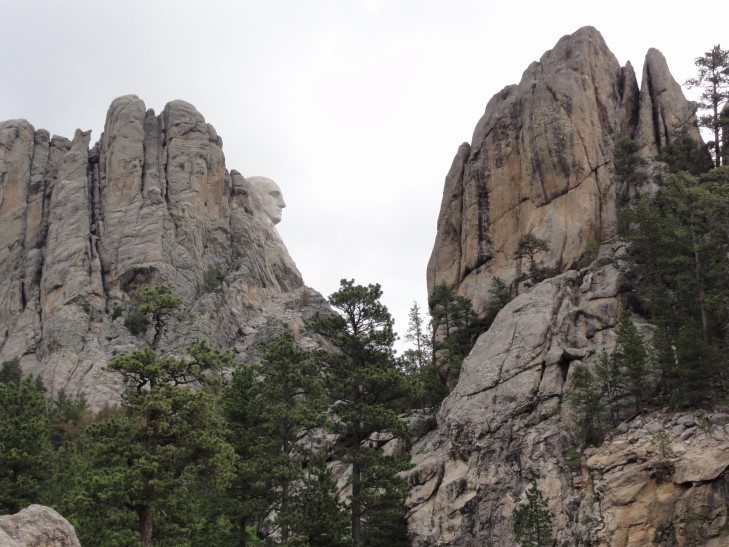
Washington's head, outside Mount Rushmore, South Dakota

Washington's head, outside Mount Rushmore, South Dakota

I was struck by how small it was.  I mean, it looks almost like a little zit just sitting there on the mountainside.  We pressed on to Mount Rushmore itself, parked in the parking deck, walked up an open-air walkway surrounded by the state flags, and to the observation deck.  Seeing all four Presidents presented the typical view of Mount Rushmore that we’ve seen all our lives.
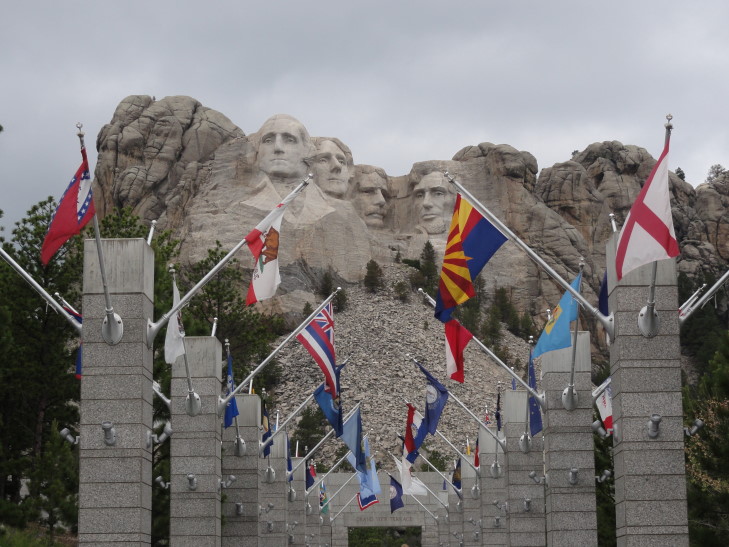
Mount Rushmore beyond States' flags, South Dakota

Mount Rushmore beyond States' flags, South Dakota

Honestly, though, it still felt a bit… small (excepting Theodore Roosevelt on account of his big stick).  We then took a walk called the Presidential Trail that provided a bit of context on the intent and construction of the site that made us appreciate it quite a bit more.  Unfortunately, during the walk it started to pour (and would do so for the rest of the day, leading to the title of this entry) and we sought refuge in the sculptor’s studio, a building built in 1939 towards the end of the work on the site.

Inside was the original model (one inch to a foot) used to build the site (through a series of exact measurements on the model and multiplying those by 12 on the mountainside).  Also was explained the process of building the monument — 90% was done with blasting, the remainder done by drilling small holes in the rock (“honeycombing”) then chiseling away the stone, and finally a final process of “bumping” the rock to smooth it.  I was struck by the amount of work required to build the monument (nearly 20 years and 400 people) and the patriotism that inspired it.  So while the Presidents may not be as big as I had pictured I was left feeling that they were every bit as grand.

Left Mount Rushmore to eat at Peggy’s Place, a small cafe in Keystone.  Then decided to drive through Custer State Park again to drive along a road or two we had bypassed when coming in the day before.  The roads were quite steep with barely two lanes.  There were several tunnels, some no wider than eight feet.  Then, after a good distance, we saw cars stopped ahead.  Our friendly donkeys from yesterday?  No…  bison.  In the road.  Next to our rental car.
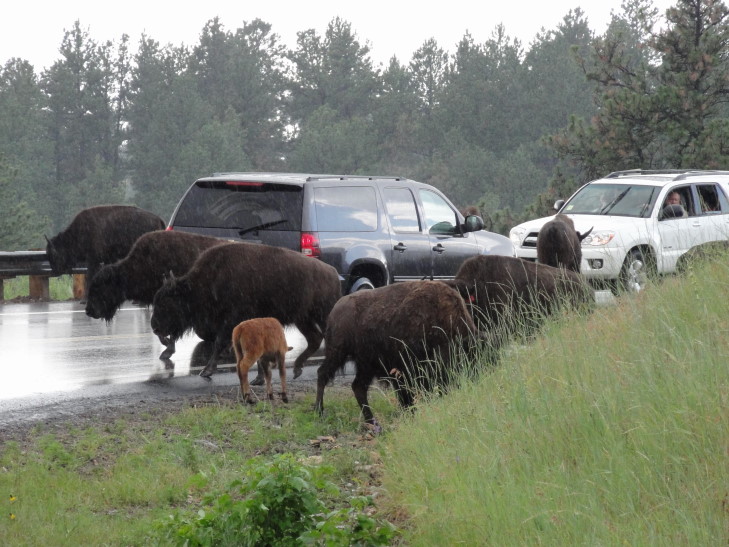
Bison Crossing, Custer State Park, South Dakota

Bison Crossing, Custer State Park, South Dakota

Now I’ve been to the National Bison Range in Montana (in 1987).  There the bison were separated from cars by fences.  I knew Custer State Park didn’t do that but I figured, as with our encounter the day before, that the bison not being, well, donkeys, would stay clear.  I was wrong.

That said, they were very well behaved and just milled about the cars and eventually moved on with nary a nudge.  It was amazing to see them that close, close enough to touch if I was dumb enough.  I wasn’t, and thankfully nobody else was dumb enough to blow their horn or spook them in anyway.  Especially since it was still lightning intermittently they were spooked enough already.  Still, what an experience.

Drove on after that and along route 87 along the Needles Scenic Highway.  Not knowing what to expect I was blown away by the numerous rock spires jutting out of the top of the hills, including The Needles.  The road at one point cut between several of the spires and, while nerve wracking to the driver (thanks Michelle, you’re the best!) was quite awe-inspiring.
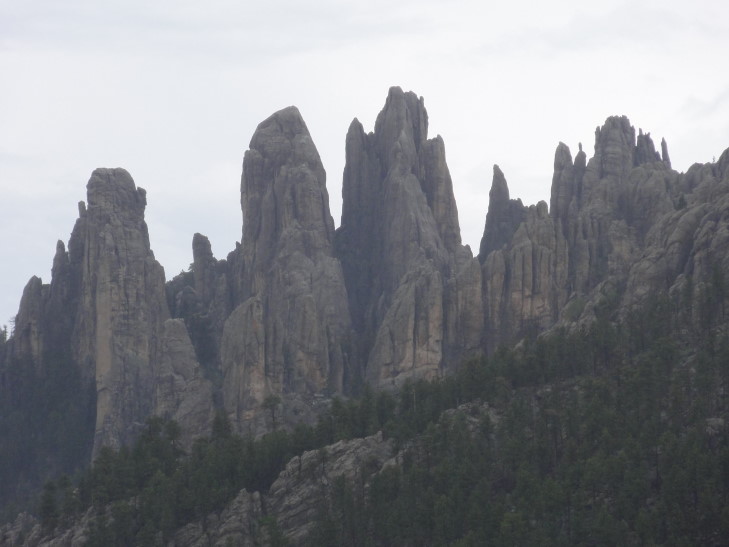
The Needles, Custer State Park, South Dakota

The Needles, Custer State Park, South Dakota

After the spires came Sylvan Lake, an amazing lake at 6000 feet.  This is the lake that was used in “National Treasure 2: Book of Secrets” as the lake behind Mount Rushmore.  It was amazing to see rock formations rising almost completely vertically hundreds of feet above the lake.  Unfortunately the thunderstorms in the area were getting closer and the rain really starting to fall so we could only manage a little bit of sight-seeing.  I’d love to go back!
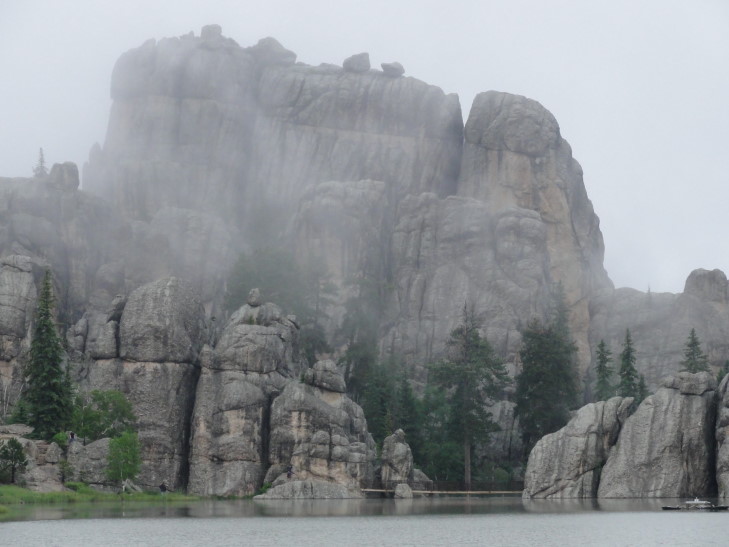
Sylvan Lake, South Dakota

Sylvan Lake, South Dakota

Headed back to the hotel and took a swim in the pool and hot tub.  Went to Desperados Cowboy Restaurant in Hill City and then Dairy Queen for a mud pie Blizzard (yummy, tons of coffee syrup!).  All-in-all a great day, marred only by the terribly crappy weather.  Let’s hope tomorrow’s weather holds for the visit to the Badlands.
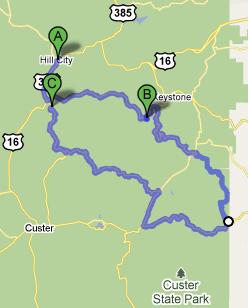
Route for July 11, 2010
Route for July 11, 2010
http://en.wikipedia.org/wiki/Mount_Rushmore

July 11, 2010

Reflections on prehistory

Filed under: Travel — Tags: — BigWeather @ 1:05 am

We saw three things on our journey today that reminded me of prehistory.  The first one is tenuous at best and the last one a bit flimsy but work with me here.

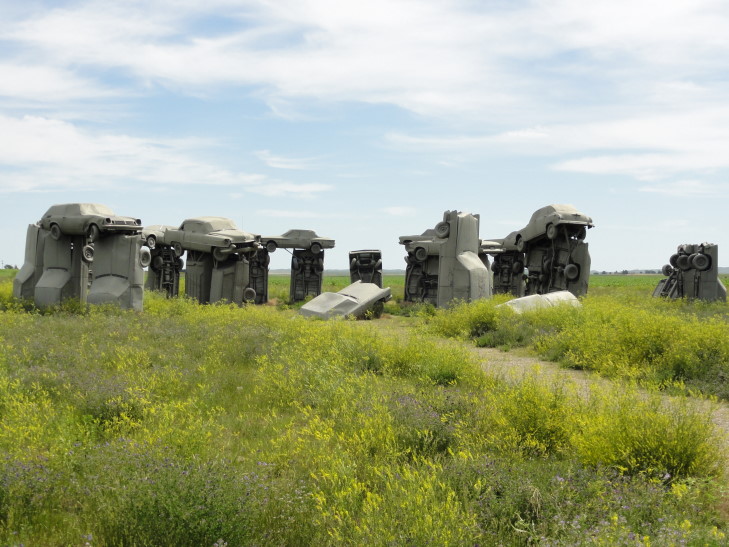
We woke up and had our Holiday Inn breakfast.  Headed out to see Carhenge, something that we had intended to see the day before but ran out of time due to the awesome visit to Scotts Bluff.  What is Carhenge?  It is a replica of Stonehenge (in current state, not as built thousands of years ago) sitting in the prairie just northeast of Alliance, Nebraska.  Rather than stone, however, the builder (artist?) chose to use old (mostly from the 50s and 60s) automobiles spray painted gray.

Carhenge, Alliance, Nebraska

Carhenge, Alliance, Nebraska

Surrounding the the main attraction, Carhenge itself, is a bit of other assorted art like a dinosaur made of metal and a station wagon with a metal frame above it and large wagon wheels attached to it to make it look like a prairie schooner.  It kind of reminded me of my family’s old brown Ford station wagon from way back when, duct taped seats and Gordon Lightfoot on the eight-track.  Admission was free and in the concession stand on the premises we learned a bit more on the history.

Basically this guy owned land near Alliance and wanted to build a memorial to his dad.  The town was vehemently against but in true mid-western spirit the guy decided that nobody could tell him what to do with his land and pressed on, completing it in 1987.  In time the town grew to accept and, eventually when he moved away, preserve and administer the site.  Heck, were it not for Carhenge we wouldn’t have visited Nebraska (as Scotts Bluff was a late addition to the itenerary) and spent a good chunk of change on hotels and food there.

Genetta didn’t get Carhenge at first.  I explained that the beauty of Carhenge is that somebody woke up one morning and thought “I need to build Stonehenge, but with spray painted cars.”  That makes me smile, and I think sums up one of the defining characteristics of humanity — doing crazy crap for the heck of it.  I asked Genetta if she could feel the mystical energy flowing from Carhenge (totally playing on the belief that some have that Stonehenge has mystical properties) and she said “only the wind.”  Can’t win ’em all over, I guess.

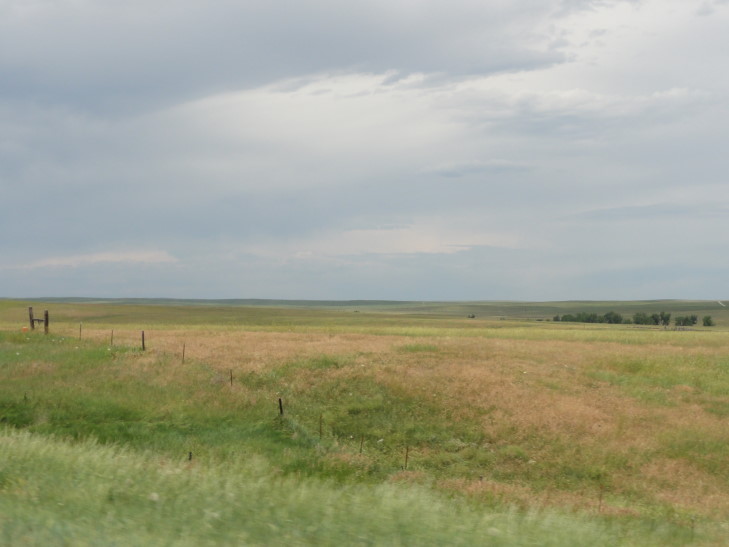
Left Carhenge and headed up towards our next destination, Hill City, South Dakota.  As we left the bluffs we traveled through our first true taste of real prairie.  Wow.  Beautiful but very desolate — field upon field of crops stretching to the horizon with nary a tree to break the sky and only the occasional train running parallel to the road to break things up.  Ok, maybe there was the occasional tree, but not many…

Prairie, Nebraska

Prairie, Nebraska

The landscape changed to wooded hills after entering extreme northwestern Nebraska.  Stopped in the town of Chadron and, after spying a sweet vintage 60s purple Mustang, ate at this place called Taco Johns.  Think Taco Bell but more edible.  They had some tasted flauta-like beef and bean sticks.  Hit the road again and crossed into South Dakota.  The wooded hills gave way to prairie again but in the distance we could see the Black Hills and the coming days of fun.

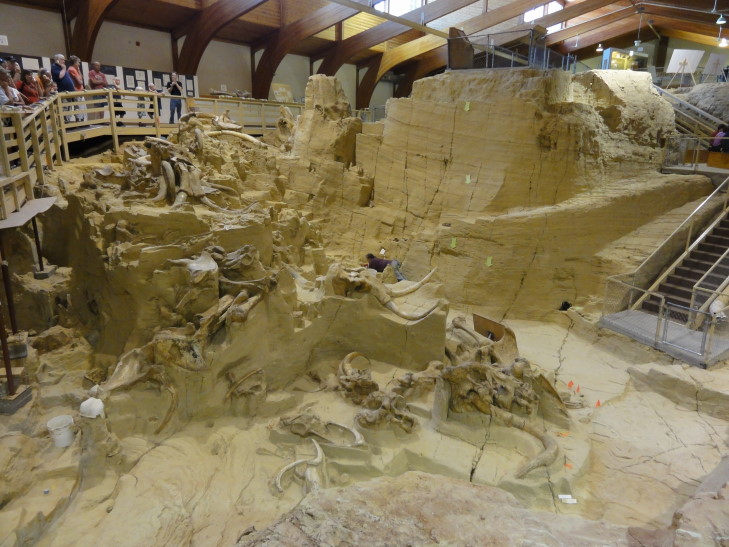
The first thing we saw in the Black Hills was in the town of Hot Springs.  This is another one of those sights that I had no intention of visiting (nor did I know of its existence) a few days ago.  The place is called Mammoth Site and it is basically a large paleontological (is that a word?  is now) of a watering hole from about 26,000 years ago where many animals became trapped and died.  I suppose that if they called it Mammoth Deathtrap of Dooooom they’d have had more people aware of its existence.

Anyhow, so that’s the second of the three prehistoric encounters that I had that day.  Walking into a building and getting to tour an actual ongoing dig site where fifty-eight mammoth (Columbian and woolly) skeletons, some nearly intact, have been unearthed so far.  They also had a really nifty museum and the tour itself was excellent.

Turns out that 26,000 years ago a cavern several hundred feet down had caved in causing the earth and rock below it to form a cavity.  An artesian spring filled this cavity with water that lured these poor mammoths to come drink.  Once they got in the watering hole, however, they discovered that they were too bulky to climb out of the steep and very slippery sides and died of exhaustion or starvation.  This happened over a period of several hundred years.  Kinda creepy to me that the later mammoths were in the watering hole unaware that ancestor mammoths were beneath them dead in the sediment, kind of like when you are swimming in a lake you wonder if there are any corpses below Poltergeist-like?  Or maybe that’s just me, but anyhow.  Incidentally, the site was discovered in 1974 (Go Wolfpack!) when a subdivision was being built.  Work stopped immediately once they realized that there were mammoth bones there and the site was bought from the developer.  Speaking of Poltergeist, can you imagine if they had built the subdivision and out of the pool started floating up all of these mammoth carcasses?  Creepy!

They had cute nick-names for many of the skeletons like Humpty Dumpty, Napoleon Bone-Apart, Elvis the Pelvis, and my favorite Murray Antoinette.  He was originally named Marie Antoinette on account of they haven’t found his skull but once they unearthed the pelvis they had to rename the skeleton.  Incidentally all fifty-eight skeletons were male.  While some would conclude that it was the stupid males that would get trapped the guide explained that mammoth society was matriarchal (how do they know this?  I guess by looking at elephant society?) so it was only the lone male mammoths that were forced to find new mates in other herds that’d come across this watering hole.  Didn’t make a whole lot of sense at the time, but hey I’m no paleontologist.

Mammoth Site, Hot Springs, South Dakota

Mammoth Site, Hot Springs, South Dakota

Left the Mammoth Site (of Dooooom!) and went deeper into the Black Hills through Wind Cave National Park.  Established in 1903 by Theodore Roosevelt (go Teddy!) to protect an extensive cave system and the prairie above it.  We were hoping to spot bison (or buffalo — same thing), especially as I had promised Addison that we’d see bison on this trip.  The weather was quickly turning nasty and while I did see a prairie dog (but wasn’t quick enough to snap a picture) no bison were to be found.  We ducked into the visitor’s center and saw some neat things like elk skulls with their antler interlocked — they had been sparring, got locked together, and died — as well as learned about prairie flora and the fact that Wind Cave could only support 300 to 350 bison (could’ve fooled me, didn’t think they were supporting any from what we’d seen!).

With rain and lightning setting the dour no-bison-to-be-seen mood we drove further on, out of the park and into Custer State Park.  We paid our entrance fee and talked with the friendly ranger (is it me or do all mid-westerners sound friendly with their awesome accent?).  She informed us that their bison herd was last seen near their airport (more of a grass landing strip, really, and that’s not too hard to build in the friggin’ prairie).  Spirits lifted we drove on the wildlife loop road, rain still coming down steadily.

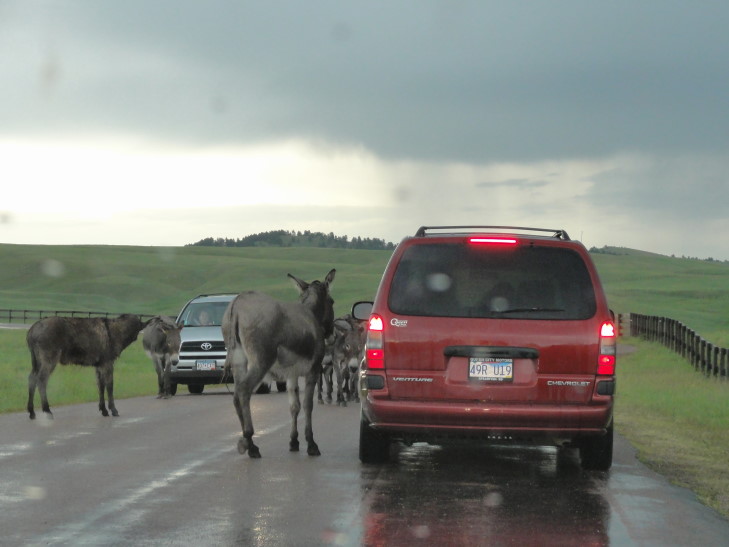
Saw many mule deer and such but no bison.  Wait a minute, cars stopped ahead!  Could it be?!  …  Donkeys?  Really?  Yup, apparently the park has its own herd (or whatever the heck donkeys form) and they were delighting in backing up traffic.  Friendly too — coming in contact with the car several times (gently, much to my relief — visions of having to pay the rental company filled me with dread).  It was pretty stressful, but eventually we were able to move past them.

Friendly donkeys, Custer State Park, South Dakota

Friendly donkeys, Custer State Park, South Dakota

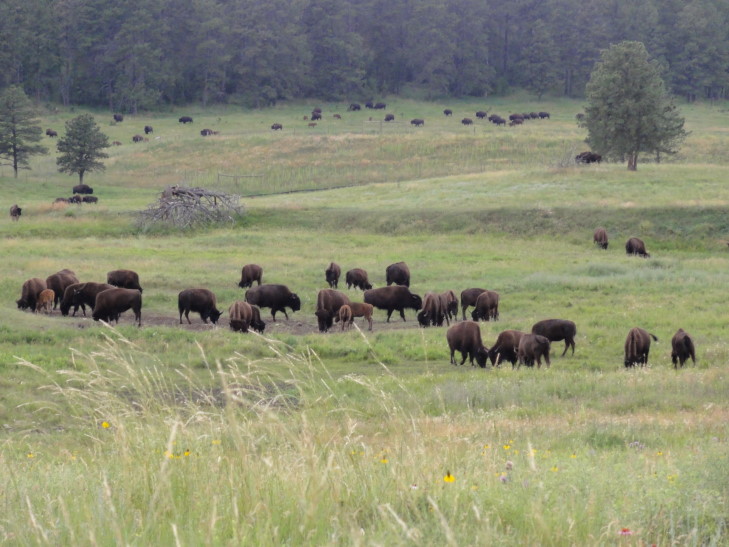
At least they weren’t bison, right?  Yeah, remember that for later…  Anyhow, we drove on and once we got just past the airport we saw an actual bison.  We were all thrilled, particularly Addison.  He said that I had promised more than one, though.  Rounded the next hill and, wham, the herd!  Probably a hundred or so (Genetta counted at least eighty), off about fifty to one hundred yards.  We got out of the car to observe but kept in mind that they are wild animals and did nothing to startle them.  Thus we had our last prehistoric encounter of the day — watching the herd made me think back to what it must have been like to have millions of them wandering across the prairie.  What a thrilling sight and what beautiful creatures.  Addison was over the moon.

Bison herd, Custer State Park, South Dakota

Bison herd, Custer State Park, South Dakota

Dusk approaching we drove past several beautiful lakes and out of the park to the town of Custer.  There the rain finally broke and we ate some Pizza Hut.  Headed from there to the first of three nights in Hill City, South Dakota.  On the way there we passed the Crazy Horse Memorial but honestly it didn’t impress much at the time (most likely because it has not been finished).

So, there you have it — three prehistoric experiences: Carhenge, Mammoth Site, and a bison herd.

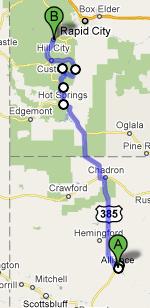
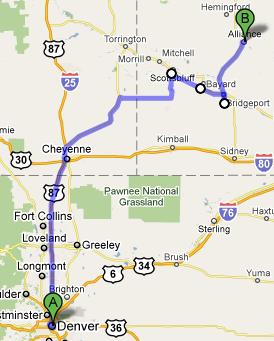
Route for July 10, 2010

Route for July 10, 2010

July 10, 2010

Too bad the winters suck…

Filed under: Travel — Tags: — BigWeather @ 1:52 am

…because the western Great Plains are really quite beautiful.

Got on the road early after our not-so-bad Holiday Inn breakfast (they even had biscuits with white sausage gravy!).  Going through the northern suburbs of Denver I’m struck by two things.  The first was how wonderful it’d be to live in an area where you can see gorgeous snow-capped mountains in July.  The second was far less pleasant — how homogeneous eating and shopping has gotten in America as the chains and big guys squeeze out the smaller local guys.  You name it, Denver has it.  Chik-fil-A (with sweet tea, no less!), check.  Cracker Barrel, check.  Krispy Kreme (yeah, shocked us), check.  Hardee’s?  Nope, but they have Carl Jr.’s (owner of Hardee’s) complete with the smiling yellow star.

Anyhow, we drove north into Wyoming through Loveland, Fort Collins, and the like, keeping the very impressive snow-capped Rockies to our left.  Yeah, I know it is a bit different from the route posted earlier, but this route was just a bit faster and definitely prettier!  At first we were being lapped before we realized the speed limit on the interstate here is 75!  Even the secondary roads are 65.  Got to Cheyenne, Wyoming’s capital and largest city at… 53,000 people.  Haha, that’s way less than half of Cary.  Wyoming is the least populated state in the U.S. (yes, even less than Alaska) and with a population of 544,000 is just under the population of mighty Wake County.  Of course what Wake County doesn’t have is the most amazing rolling hills with the biggest sky you’ve ever seen.  What a gorgeous state.

Shortly after we crossed into Nebraska and, despite being annoyed at the route going from 65 to 60 (turns out it was just in that area, later roads in Nebraska demonstrated the Colorado and Wyoming attitude of “hey, we know this land is beautiful but there is a metric butt-ton of it so we’ll expedite your journey”), found it to be very beautiful as well.  Great bluffs of beige and light gray rock punctuated the rolling green and brown hills.  I was as shocked as anyone because while I kind of expected Colorado and Wyoming to be beautiful, “beautiful” is not the first thing that comes to mind when I think of Nebraska.

Wildcat Hills, Nebraska

Wildcat Hills, Nebraska

Quick historical note about our next stop: In 1828 Hiram Scott of the Rocky Mountain Fur Company was wandering around western Nebraska with some co-workers or friends or what-not and for whatever reason was incapacitated.  He asked his friends to go ahead and that he’d be fine and would catch up with them.  Well, it’s a pretty well established fact that people that end up fine and catch up with their co-workers or friends don’t have geographical features named after them so you can guess that Hiram Scott of Scotts Bluff fame didn’t fare so well.

Scotts Bluff was first discovered by Europeans in 1812 but due to the whole War of 1812 thing it was pretty much ignored.  It was rediscovered in 1823 and in the 1840s and 50s would become famous as a landmark for people traveling first on the Mormon Road, then the Oregon and California Trails.  At the time people would take their chances and follow in the North Platte river valley (dangerous as the wagon could sink in the mud or be washed away) or in a pass several miles south where an enterprising person by the name Robidoux set up a trading post (the first building the emigrants would see since leaving a fort in eastern Nebraska over 250 miles away!) and charged exorbitant prices.  A better pass, Mitchell Pass, (better in that it shaved 8 miles — equivalent to a half day’s travel) was discovered in 1851 between the river and Robidoux’s pass and it is here that the famous Oregon Trail traversed the bluffs.  It is also here where the Park Service established Scotts Bluff National Monument.

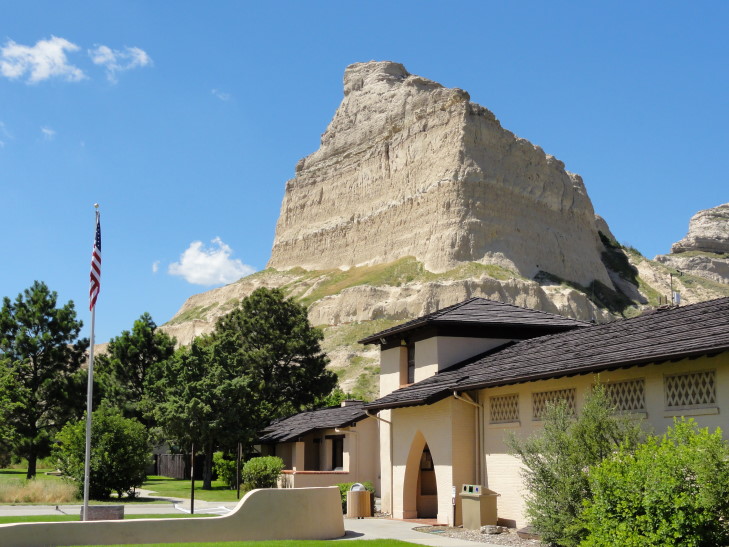
Scotts Bluff National Monument, Nebraska

Scotts Bluff National Monument, Nebraska

After a lunch at Chili’s in Scottsbluff we visited Scotts Bluff.  For a destination that I only recently added (after seeing a picture of it in a AAA book) it sure delivered.  It is impossible to describe (and my pictures do it very little justice) how incredible the sight of these 800+ foot bluffs rising out of the surrounding prairie is.  We were greeted by the visitor’s center and also a procession of three “prairie schooners”, or covered wagons, lined up as if they were heading up over Mitchell Pass.  The visitor’s center was nice — a few exhibits and a short 12 minute movie.  We picked up a couple of magnets as well, since that’s Our Thing.

Addison came running in excitedly telling us about this snake that he took pictures of.  I figured it was a fake snake, one of the exhibits, but it turns out that it was a Great Plains Rat Snake (or at least, that’s what we think it was — the Ranger said “corn snake” and Wikipedia lists the Great Plains Rat Snake as being in that family) about 4 or 5 feet long.  It was just slithering in the bushes near the restrooms and made a quick dash for the Ladies’ room.  A quick thinking person jumped in front of it and it slithered away to be caught (and later released away from the area) by the Ranger.  It made my subsequent visit to the Mens’ room a bit more adventurous — after all, who is to say another wasn’t lying in wait?  That’d be a great way to die, wouldn’t it?  Snake bit in Nebraska whilst doing #2.

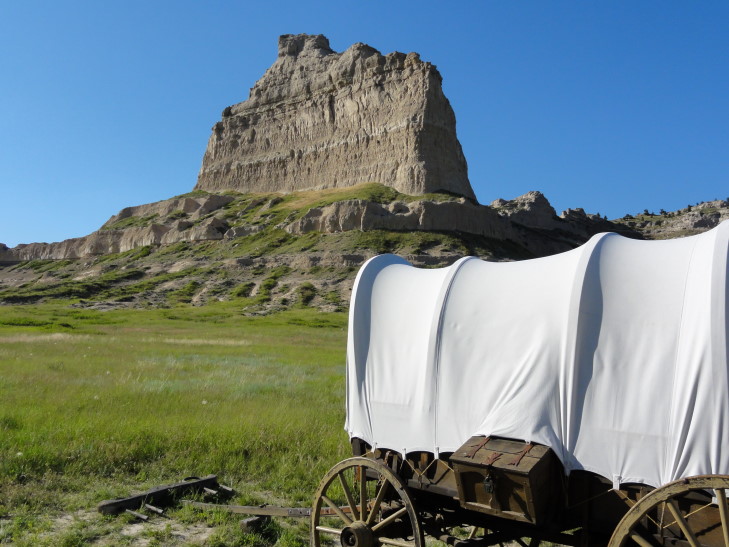
I survived, though!  Out at the wagons a historical re-enactor (now, that’d be a fun job!) explained to us several details of the crossing.  I, like many, thought that the poor were the ones making the journey westward (because, hey, free land!) but the cost of the journey was enormous — easily a few years’ salary to buy the wagon (several companies back East manufactured them) and the team of four or more oxen (or horses, but those were a waste of money for the task at hand) to pull it.  They’d pack a ton of stuff but then slowly shed it by the trail-side as time went on.  Many wagons would have a loaded firearm on board in case of attack (the number of Native American attacks was actually quite low, much lower than the rumors of attacks) or hunting needs.  Sadly, those guns killed many of their owners through accidents.

Prairie Schooner near Mitchell Pass, Scotts Bluff, Nebraska

Prairie Schooner near Mitchell Pass, Scotts Bluff, Nebraska

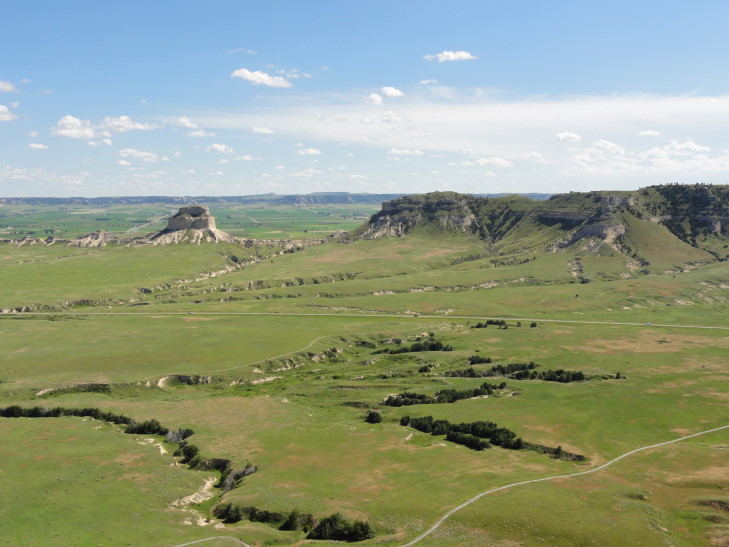
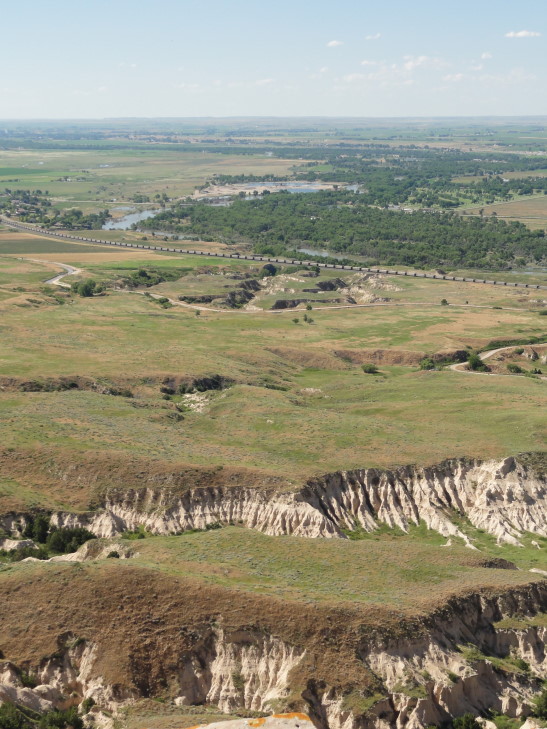
We took the shuttle up to the top of the bluff and took a quick 1/8 mile walk to see the view to the south.  That view looked over the Wildcat Hills as well as several buttes and other bluffs.  Outstanding!  We then took a longer 1/2 mile walk to see the view to the north.  That mainly consisted of looking over the North Platte river valley (and several of many very long freight trains snaking along it) and the town of Scottsbluff (at 14,000 people the eighth largest city in Nebraska!).

Atop Scotts Bluff, Nebraska, looking South

Atop Scotts Bluff, Nebraska, looking South

Atop Scotts Bluff, Nebraska, looking North

Atop Scotts Bluff, Nebraska, looking North

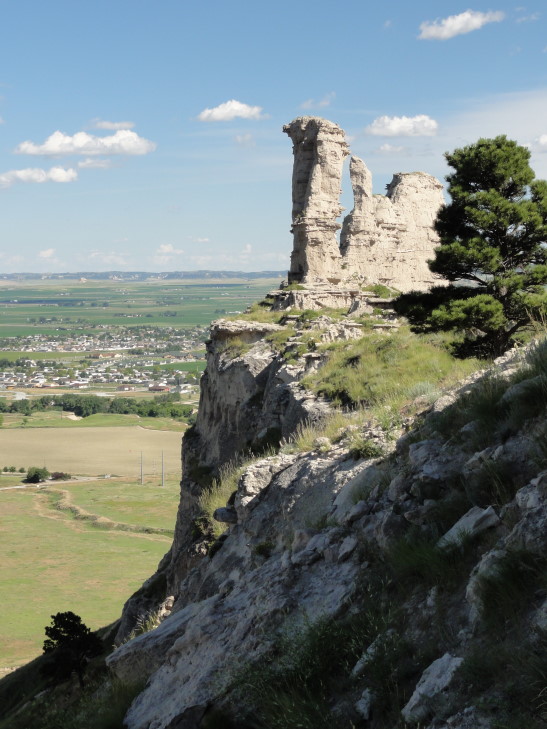
Finally we descended via a 1.6 mile trail back to the visitor’s center.  That trail was steep with lots of switchbacks.  There was this woman running up and down the trail repeatedly (she did it several times in the time it took us to get down once) — cuh-razy!  The walk itself was wonderful.  Nice breeze though a bit hot when we were in the sun and not in the bluffs’ shadows.  A few very, very steep (the “kids, if you fall, you’re dead” variety) drop-offs that were a bit vertigo inducing but fun nonetheless.  We enjoyed seeing some small cactus, thistles, the largest dandelions I’ve ever seen (the size of a baseball), and the layers of sediment (including layers of ash from prehistoric eruptions in the Rockies) as we climbed down.  There was also a hand-carved tunnel (and there were three hand-carved vehicle tunnels on the road on the way up as well, dug in the ’30s) — hand-carved so as to not damage the sandstone unnecessarily.

Descending Scotts Bluff, Nebraska

Descending Scotts Bluff, Nebraska

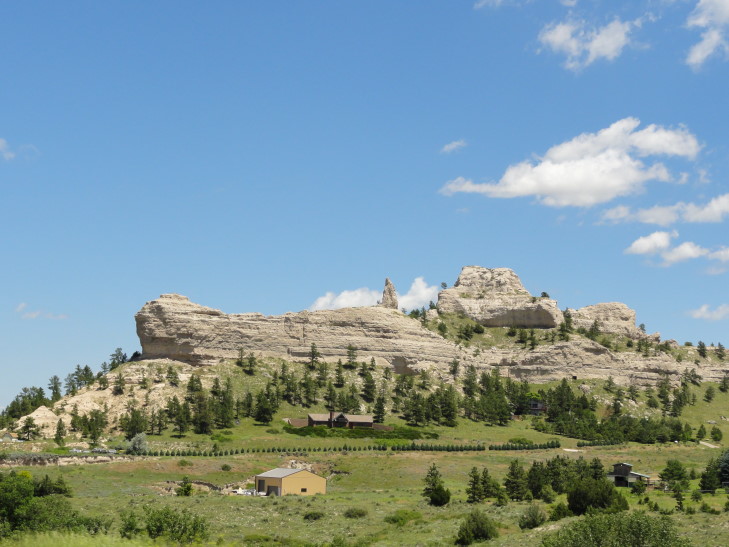
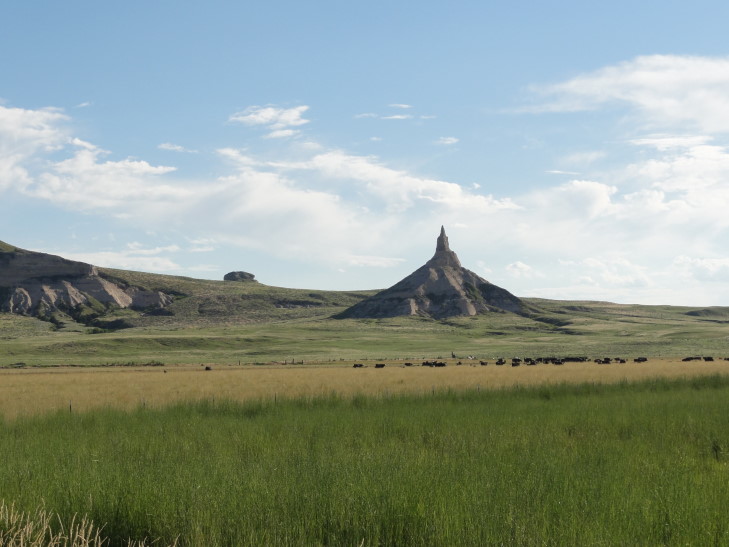
After returning back to the visitor’s center we drove about twenty minutes to see Chimney Rock, a famous marker a bit east of Scotts Bluff, and a little bit further to see the Courthouse and Jail Rocks.  Sadly we were a bit late to visit the Chimney Rock visitor’s center and the Courthouse and Jail Rocks only had a marker.

Chimney Rock, Nebraska

Chimney Rock, Nebraska

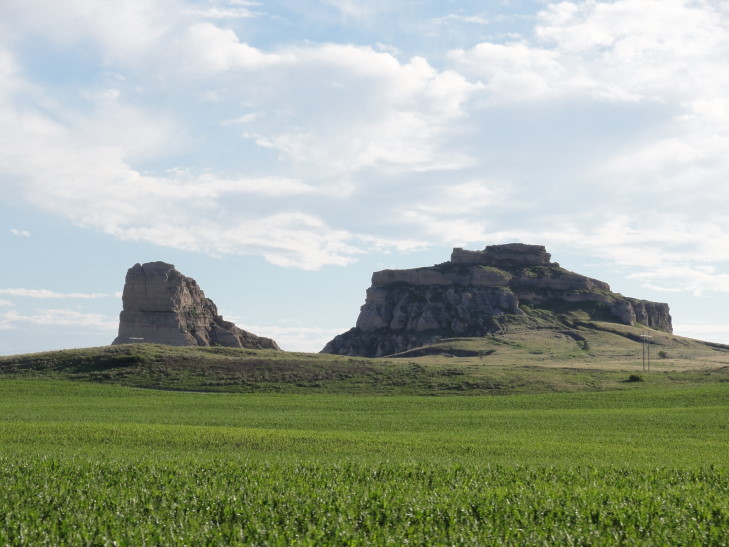
Courthouse and Jail Rocks, Nebraska

Courthouse and Jail Rocks, Nebraska

We then turned north towards Alliance, Nebraska, and our lodging for the night.  Ate at a restaurant called “Ken and Dale’s” and had steak.  Not bad at all, though Genetta had issues eating the steak due to her braces hurting.  Hopefully she’ll feel better soon.

The next three nights my room won’t have wireless but I should be able to post blogs from the common area or pool.  Here’s hoping that I can as we’ve got some exciting places coming up in South Dakota!

Route for July 9, 2010

Route for July 9, 2010

July 9, 2010

Where’d all the trees go?!

Filed under: Travel — Tags: — BigWeather @ 12:00 am

Arrived safely in Denver, CO earlier tonight.  What a change in weather — from 90s and sunny in Raleigh (though it was beginning to drizzle when we were taking off so I hope we got some needed rain) to what feels like an early October evening.  Stiff breeze and temperatures in the 60s had us grabbing for the light coats we brought.

We woke up early this morning and did a bit of work as well as some packing.  Michelle’s dad drove us to the airport and we had plenty of time before our 4:45p flight.  Michelle and the kids got some ice cream while I just fretted over the upcoming travel.  We were in group A, positions 53 through 56, for boarding on 1275 to Denver on Southwest Airlines.

The flight itself was great.  We’re pleased with Southwest so far.  It was kind of odd just walking on the plane and choosing seats.  Kind of liberating in a way, though.  Addison and Genetta got window seats, Michelle the middle next to Addison and I the aisle.  Complimentary drinks and snacks (and oddly they said we could take as much as we want and kept coming back and offering more drink and snacks).  Some funny commentary by the staff (a “yay” on landing, a “wooo fun” response on learning that the trip to Oakland, CA would continue on a different plane, and a funny song: “We love you / you love us / we’re much faster than a bus” and something about marrying one of them would mean free travel).  Anyhow, a very enjoyable experience, even with a number of younger kids on the flight.

It was cloudy most of the way but they broke somewhere over eastern Colorado allowing us to see just how treeless that area is.  Landed and got to take a neat tram from terminal C to baggage claim.  They had a cool statue of Anubis (of Egypt fame, celebrating the arrival of a Tut exhibit to Denver) labeled “King Tut” and a statue of a blue horse with red eyes that I thought celebrated the Broncos (but I was wrong, it turns out — not the first time!).  The airport itself looked like a series of tents or something.  Nifty.  Rented a Ford Explorer and set out.

I still can’t get over the lack of trees.  Just brown grass everywhere and in the far distance the towering Rockies.  That was particularly beautiful as the setting sun cast rays through the clouds that were partially obscured by the peaks.  Despite Denver being very flat and very grid-like on the western edge of town the mountains just rise up steeply.

Checked in to our hotel and ate at this Sporting News grill.  Michelle had a salad with chicken that turned out to be too spicy and the rest of us had burgers.  It was good, but honestly by that time I would’ve eaten a prairie dog or whatever other critters they have out here (they did have Bison fajitas on the menu)!

Hopefully I’ll get better at this blogging stuff as time goes on and tomorrow’s at least should have pretty pictures (as we journey through southeastern Wyoming and into Nebraska and visit Scotts Bluff and Carhenge) to distract from the crappy writing.

July 6, 2010

July 4th Picture and Video

Filed under: Uncategorized — BigWeather @ 3:09 am

We went to the fairgrounds to watch the fireworks last night.  Ok, ok, this is really an excuse to test uploading a picture and a video.

Original image has been shrunk to 25% and saved at lesser quality from its original 3Mb and change.

Fireworks Video

This was output to the lowest quality (320×240) from the original huge 1080i source.

« Newer PostsOlder Posts »

Powered by WordPress